Insights from healthcare candidates & hiring managers
This report analyzes behavioral health candidate survey data to reveal what truly drives application, interview, and offer decisions. The findings show that reputation, leadership credibility, compensation transparency, and hiring efficiency directly determine whether organizations attract top talent or lose it.
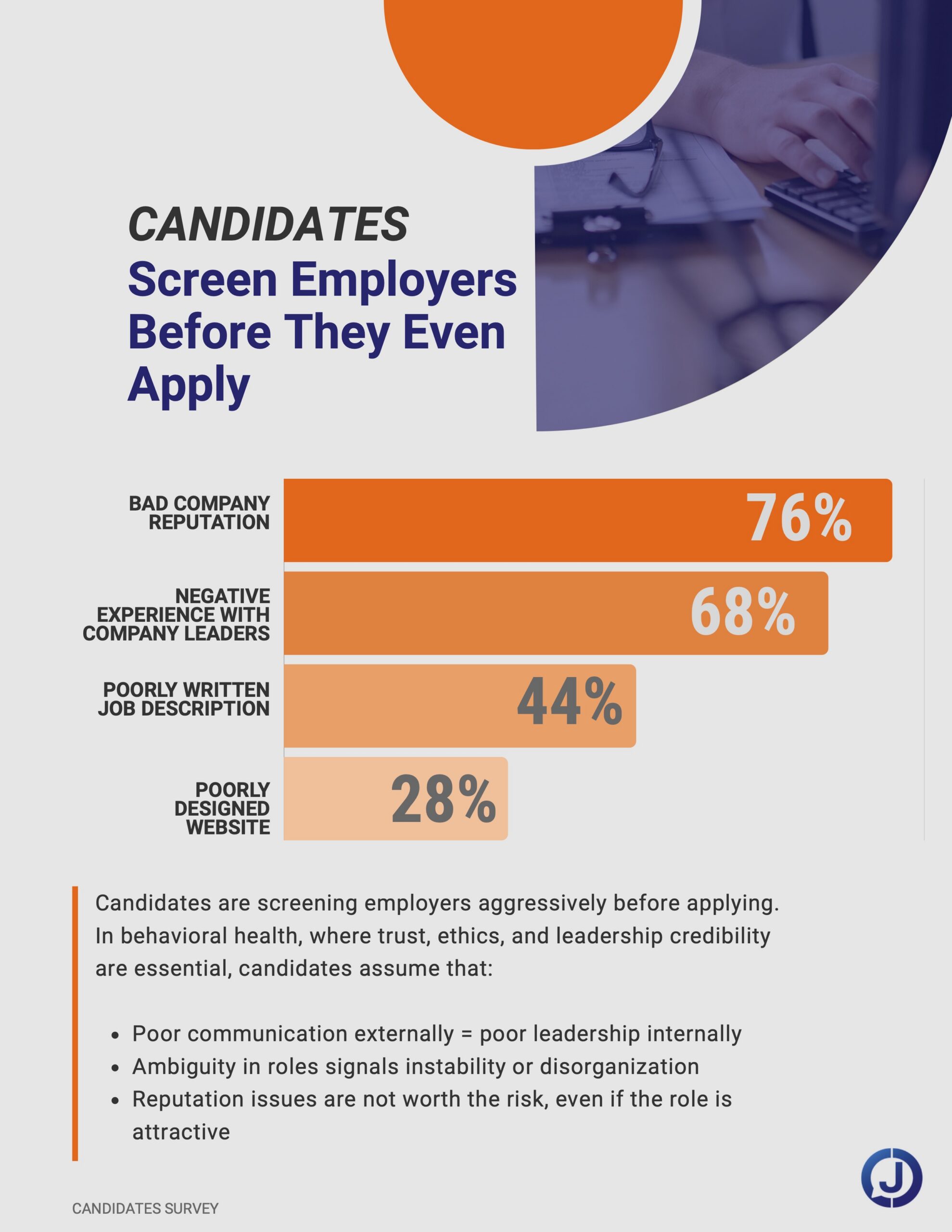
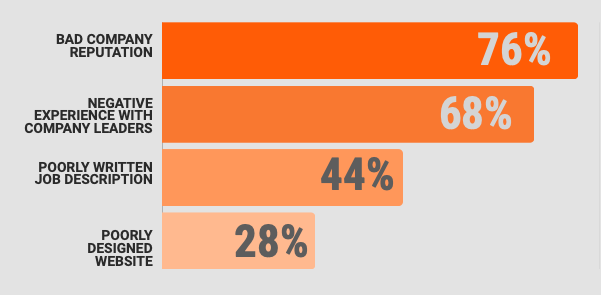
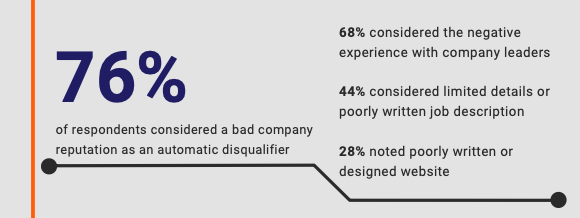
- 76 percent of candidates consider a bad company reputation an automatic disqualifier, often before submitting an application.
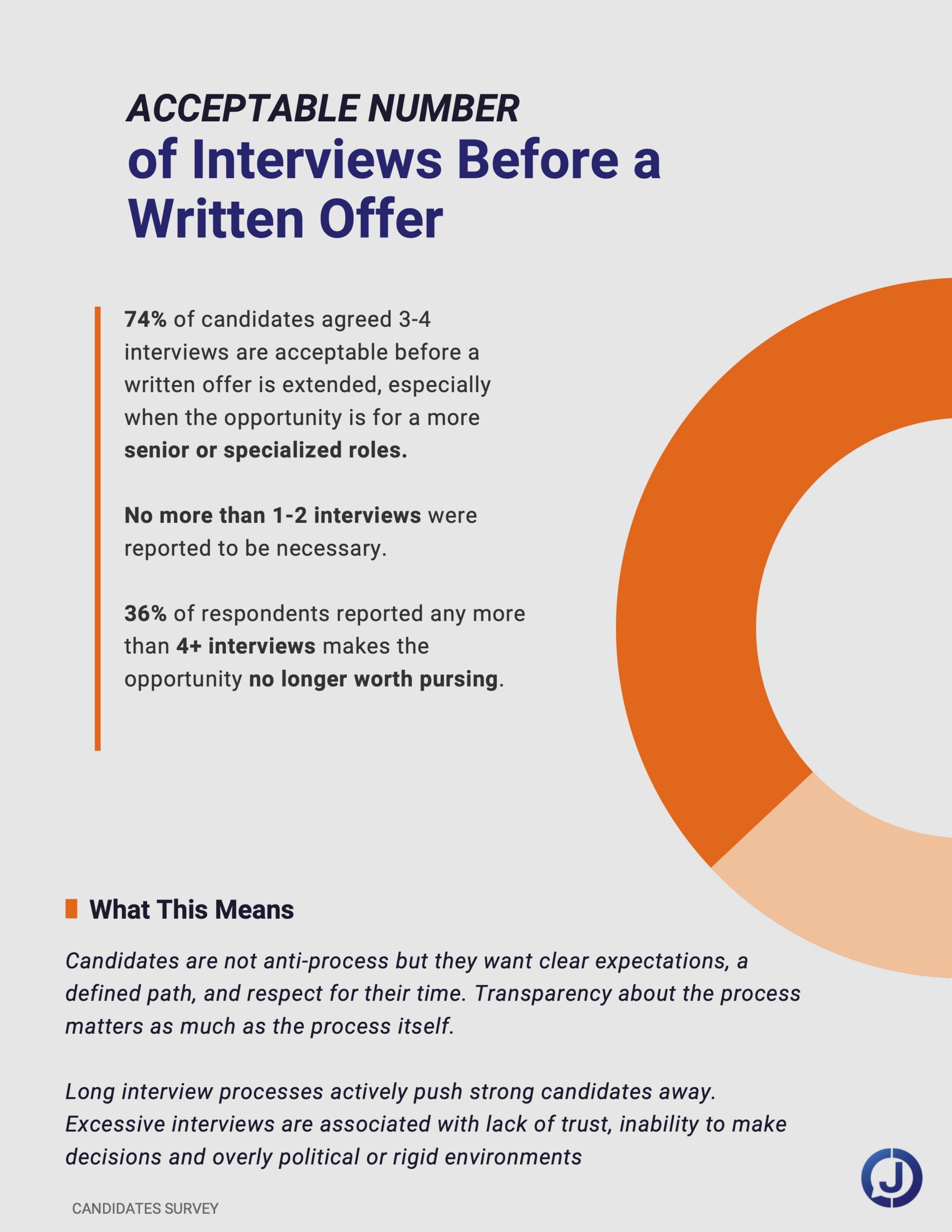
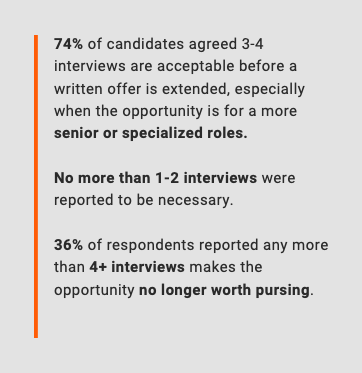
- 36 percent of candidates report that more than four interviews makes the opportunity no longer worth pursuing, signaling that hiring speed is now part of employer brand.
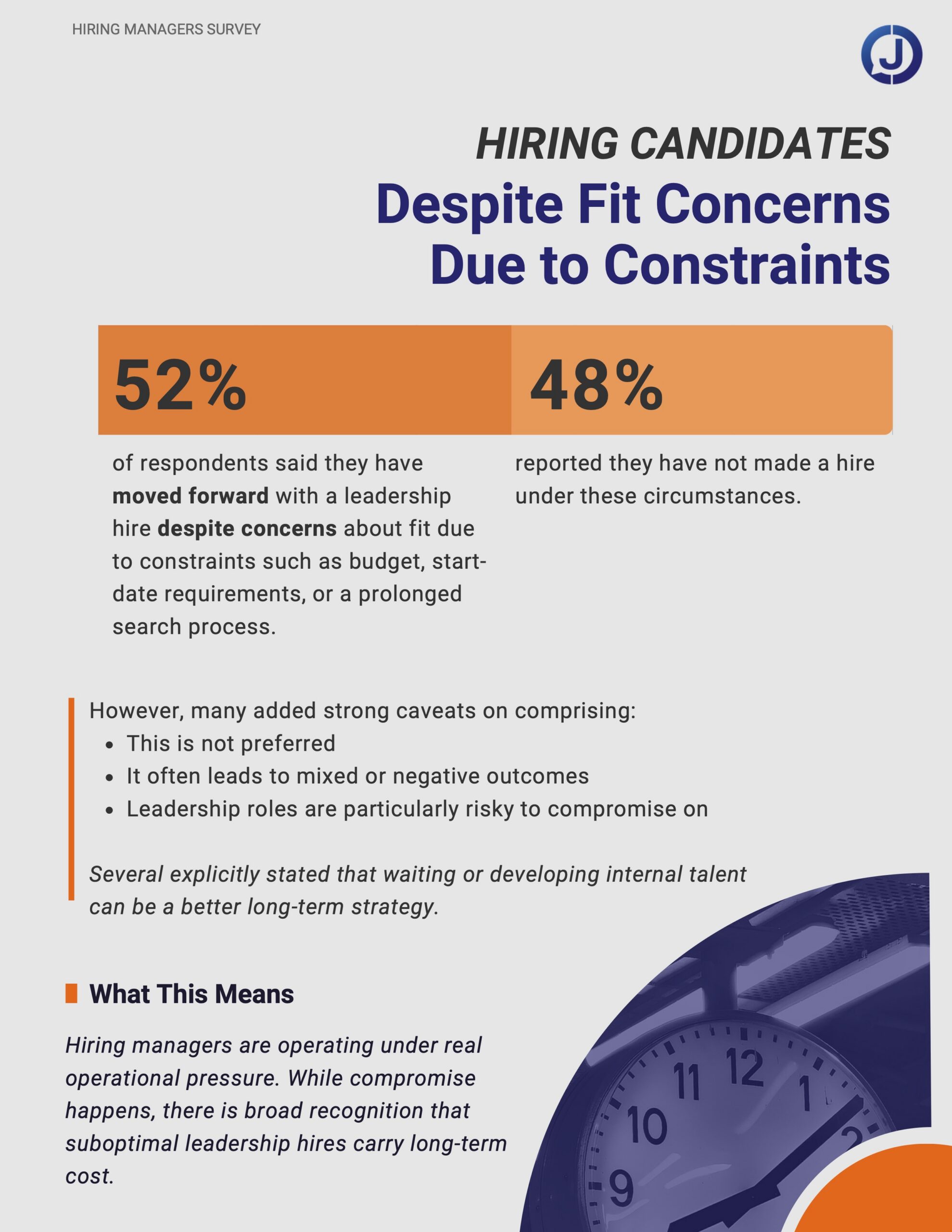
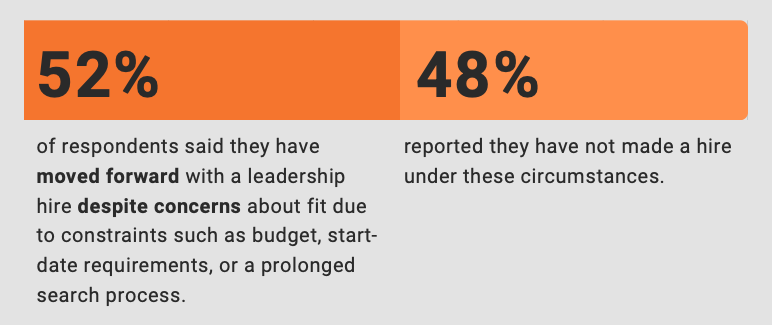
- 52 percent of hiring managers admit to moving forward with leadership hires despite fit concerns due to operational pressure, even while recognizing the long term risks.
VIEW THE PRESENTATION HERE:


Candidates are screening employers aggressively before applying. In behavioral health, where trust, ethics, and leadership credibility are essential, candidates assume that:
- Poor communication externally = poor leadership internally
- Ambiguity in roles signals instability or disorganization
- Reputation issues are not worth the risk, even if the role is attractive
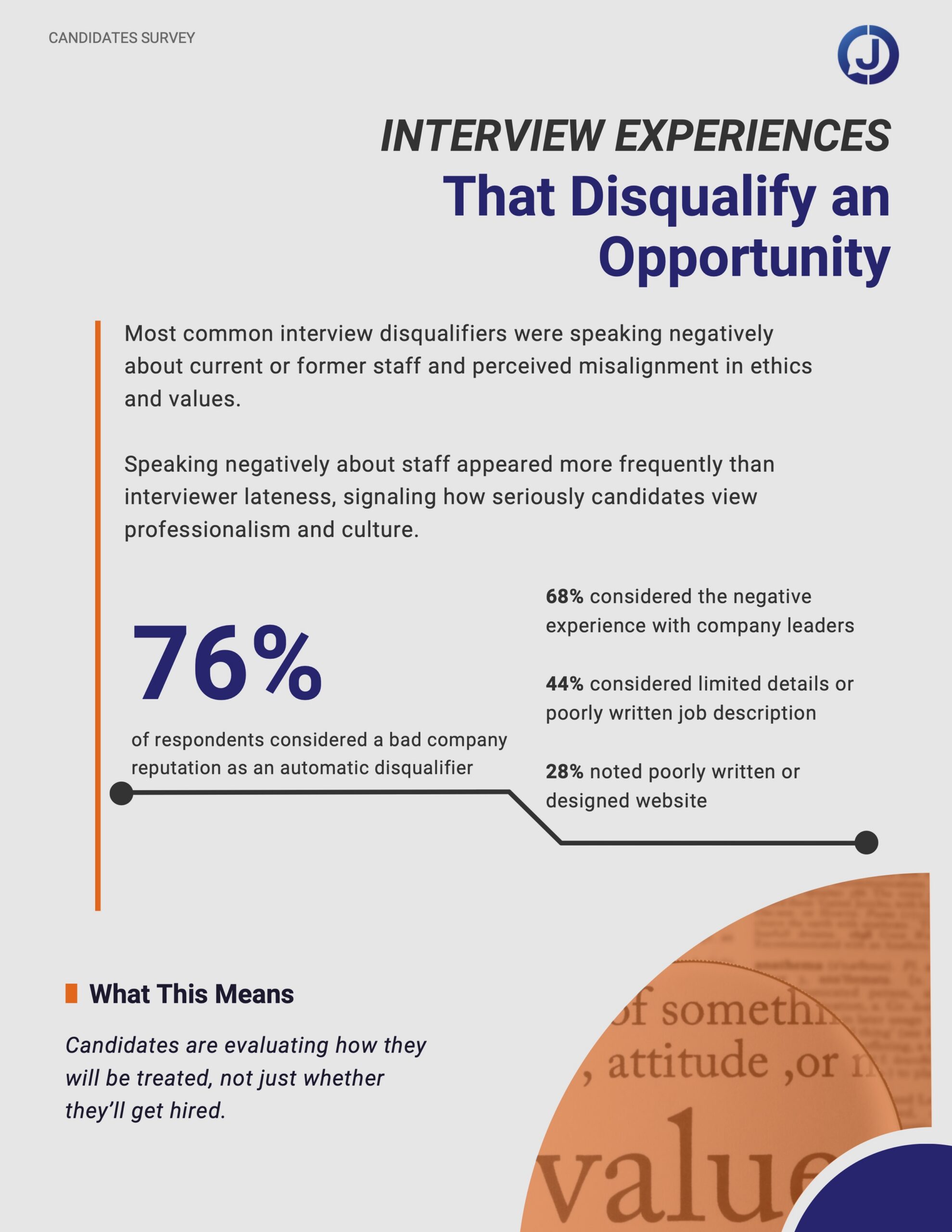
INTERVIEW EXPERIENCES That Disqualify an Opportunity
Most common interview disqualifiers were speaking negatively about current or former staff and perceived misalignment in ethics and values. Speaking negatively about staff appeared more frequently than interviewer lateness, signaling how seriously candidates view professionalism and culture.
What This Means: Candidates are evaluating how they will be treated, not just whether they’ll get hired.
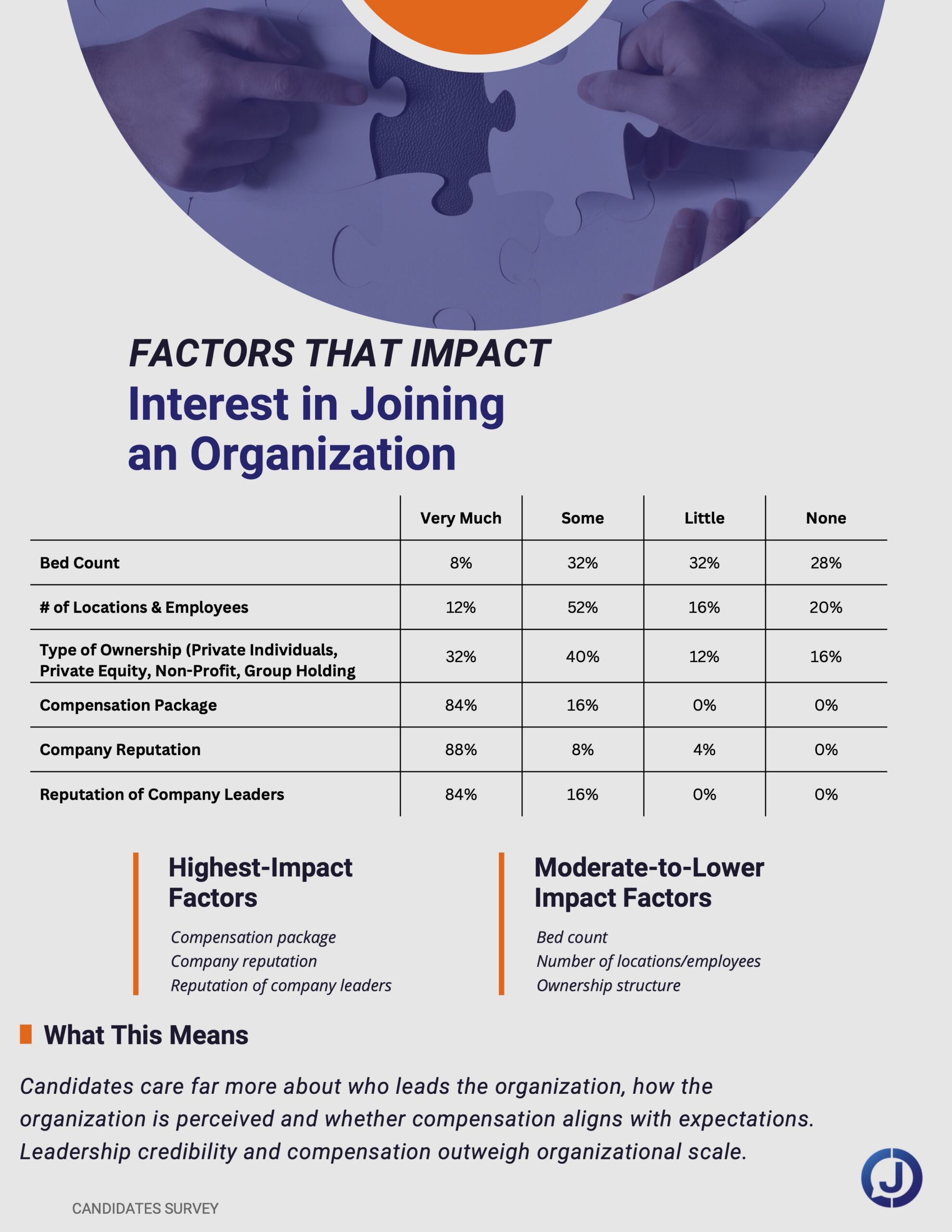
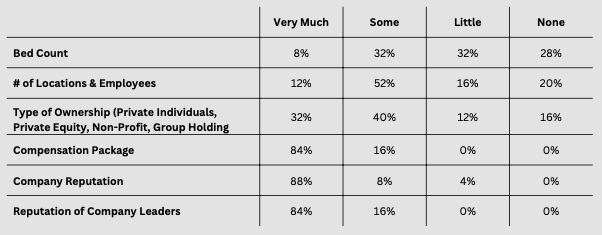
FACTORS THAT IMPACT Interest in Joining an Organization
What This Means: Candidates care far more about who leads the organization, how the organization is perceived and whether compensation aligns with expectations. Leadership credibility and compensation outweigh organizational scale.
ACCEPTABLE NUMBER of Interviews Before a Written Offer
What This Means: Candidates are not anti-process but they want clear expectations, a defined path, and respect for their time. Transparency about the process matters as much as the process itself.
Long interview processes actively push strong candidates away. Excessive interviews are associated with lack of trust, inability to make decisions and overly political or rigid environments
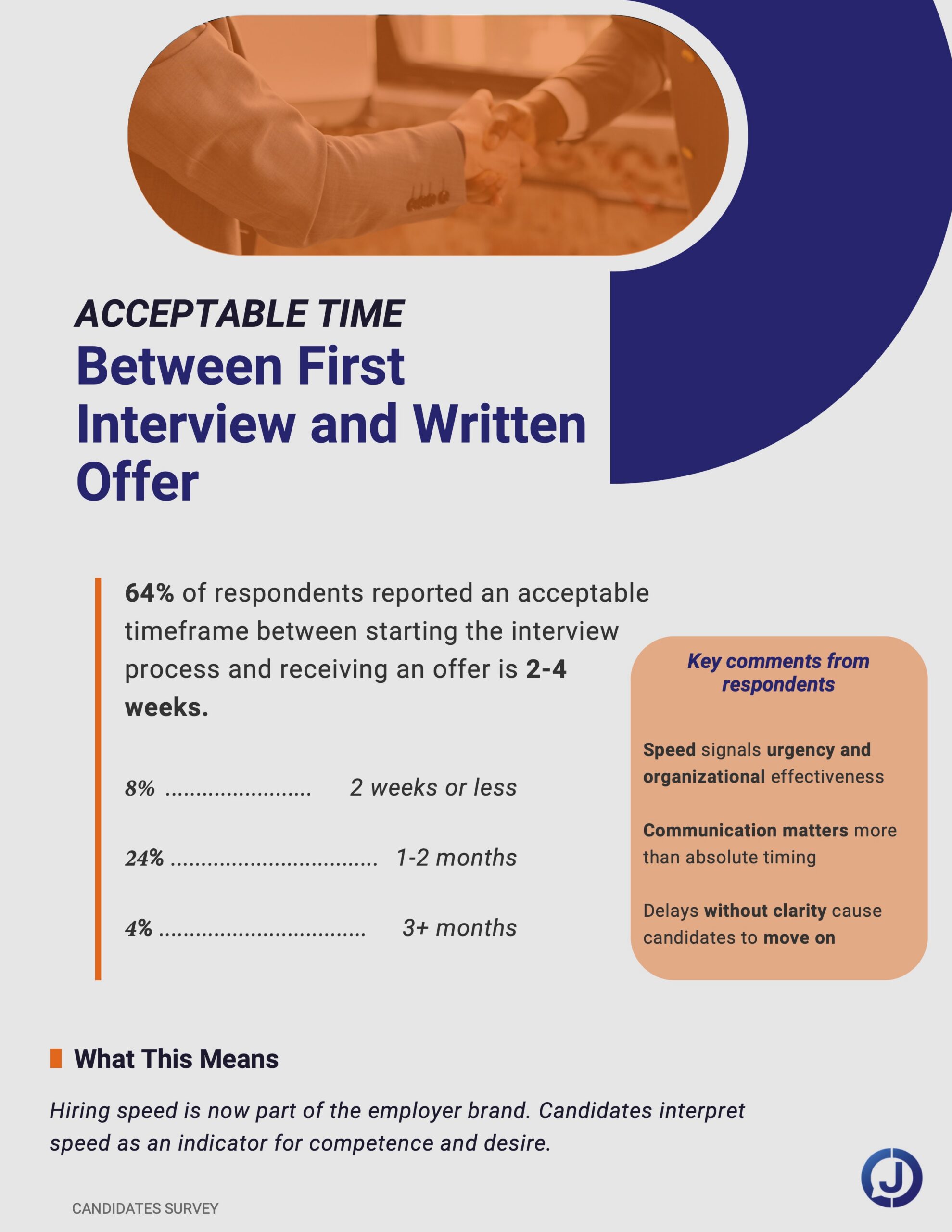
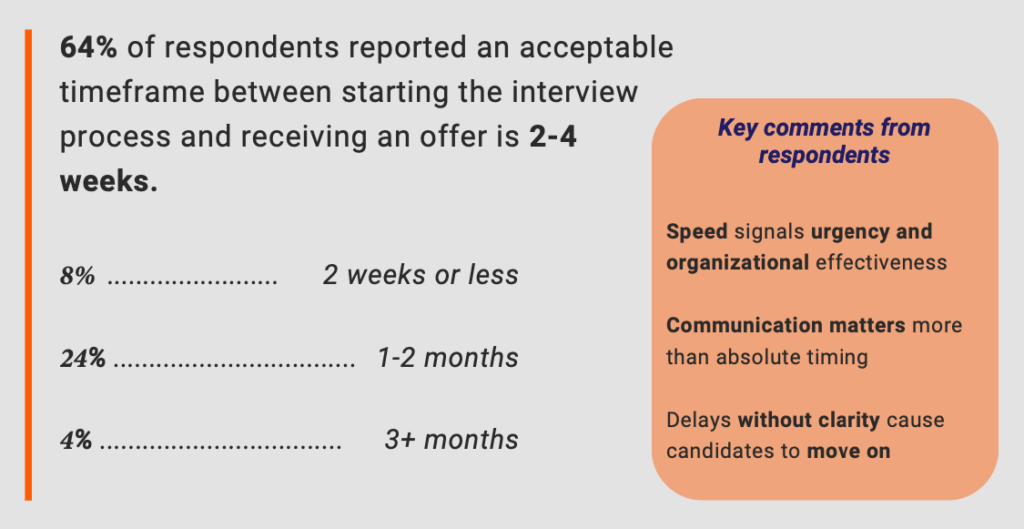
ACCEPTABLE TIME Between First Interview and Written Offer
What This Means: Hiring speed is now part of the employer brand. Candidates interpret speed as an indicator for competence and desire.
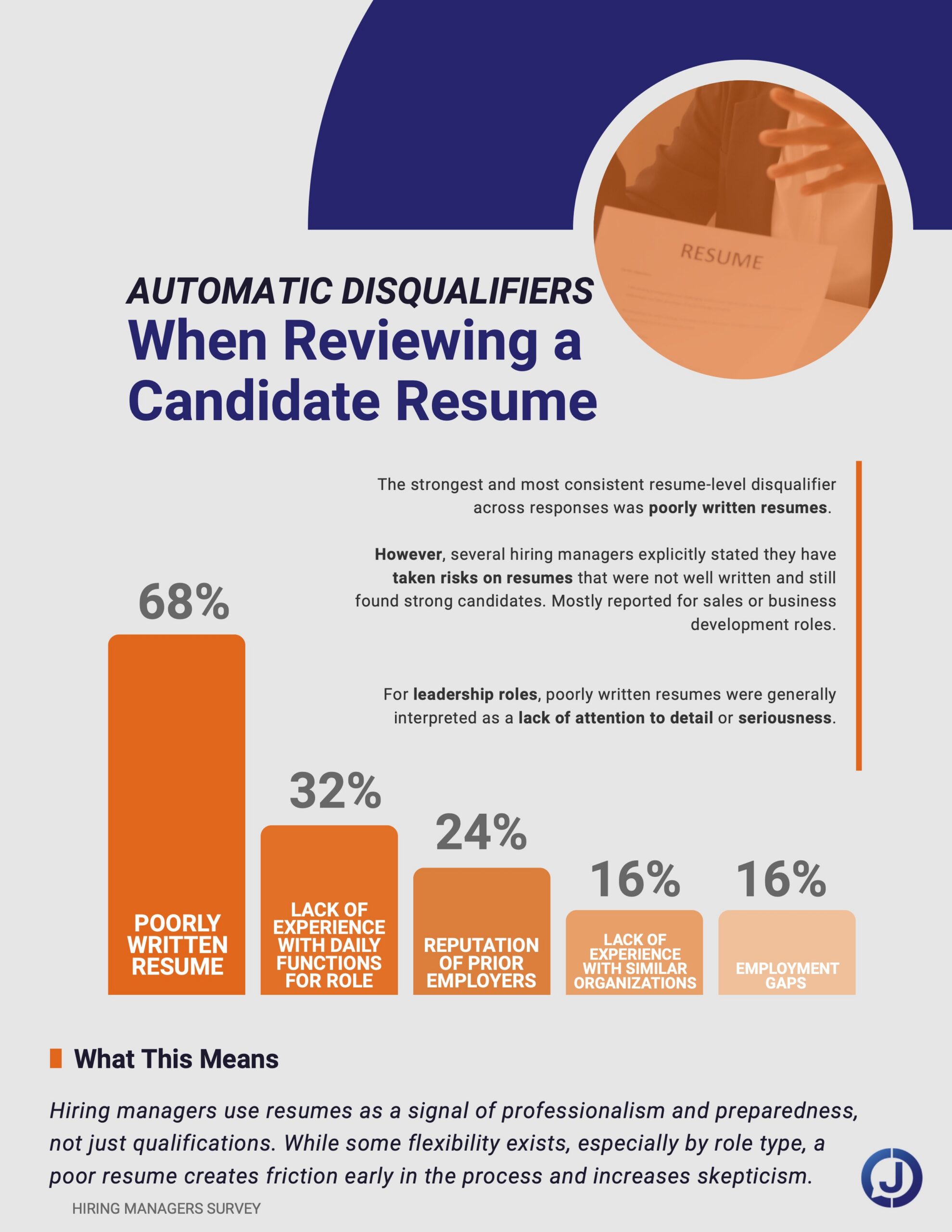
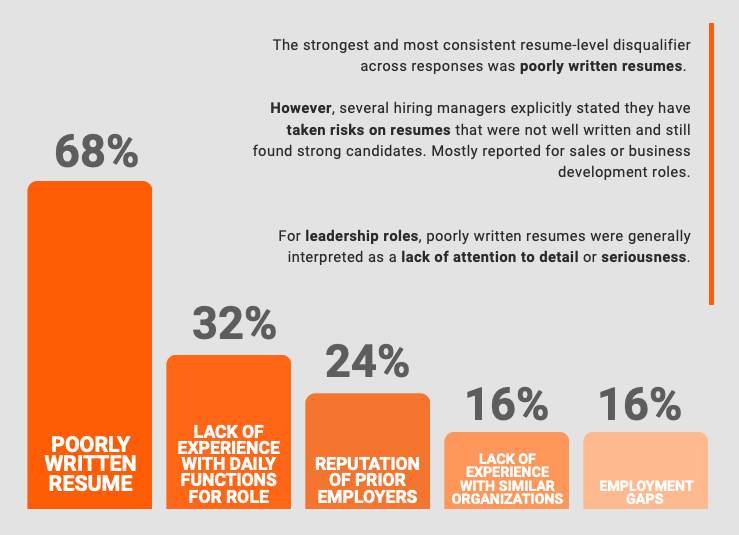
AUTOMATIC DISQUALIFIERS When Reviewing a Candidate Resume
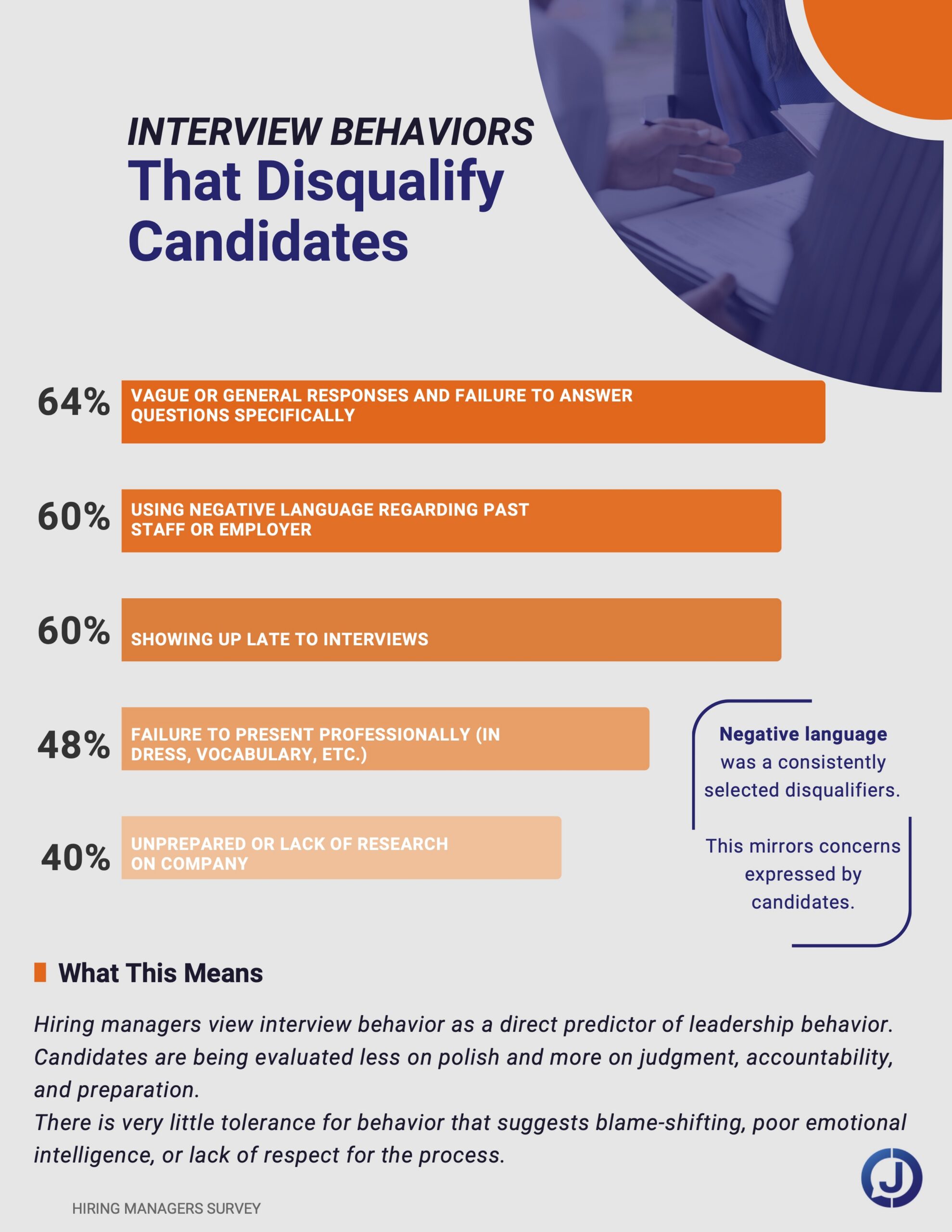
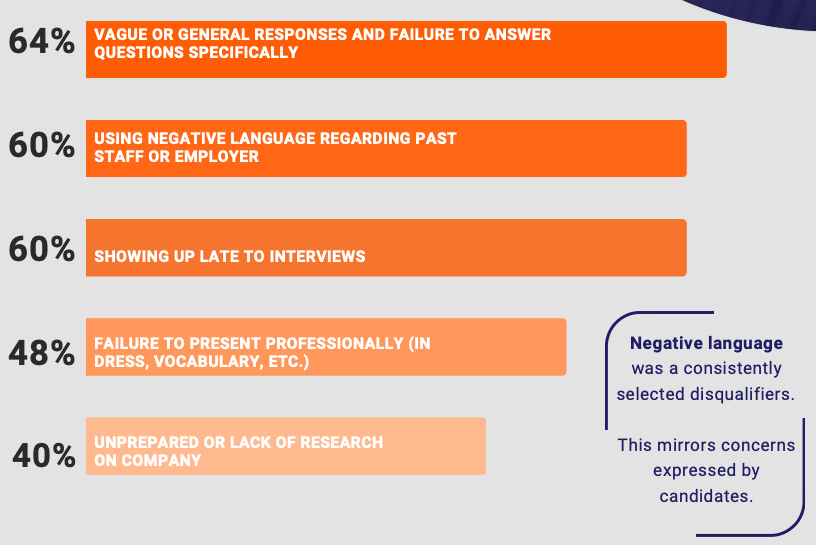
INTERVIEW BEHAVIORS That Disqualify Candidates
What This Means:
Hiring managers view interview behavior as a direct predictor of leadership behavior. Candidates are being evaluated less on polish and more on judgment, accountability, and preparation.
There is very little tolerance for behavior that suggests blame-shifting, poor emotional intelligence, or lack of respect for the process.
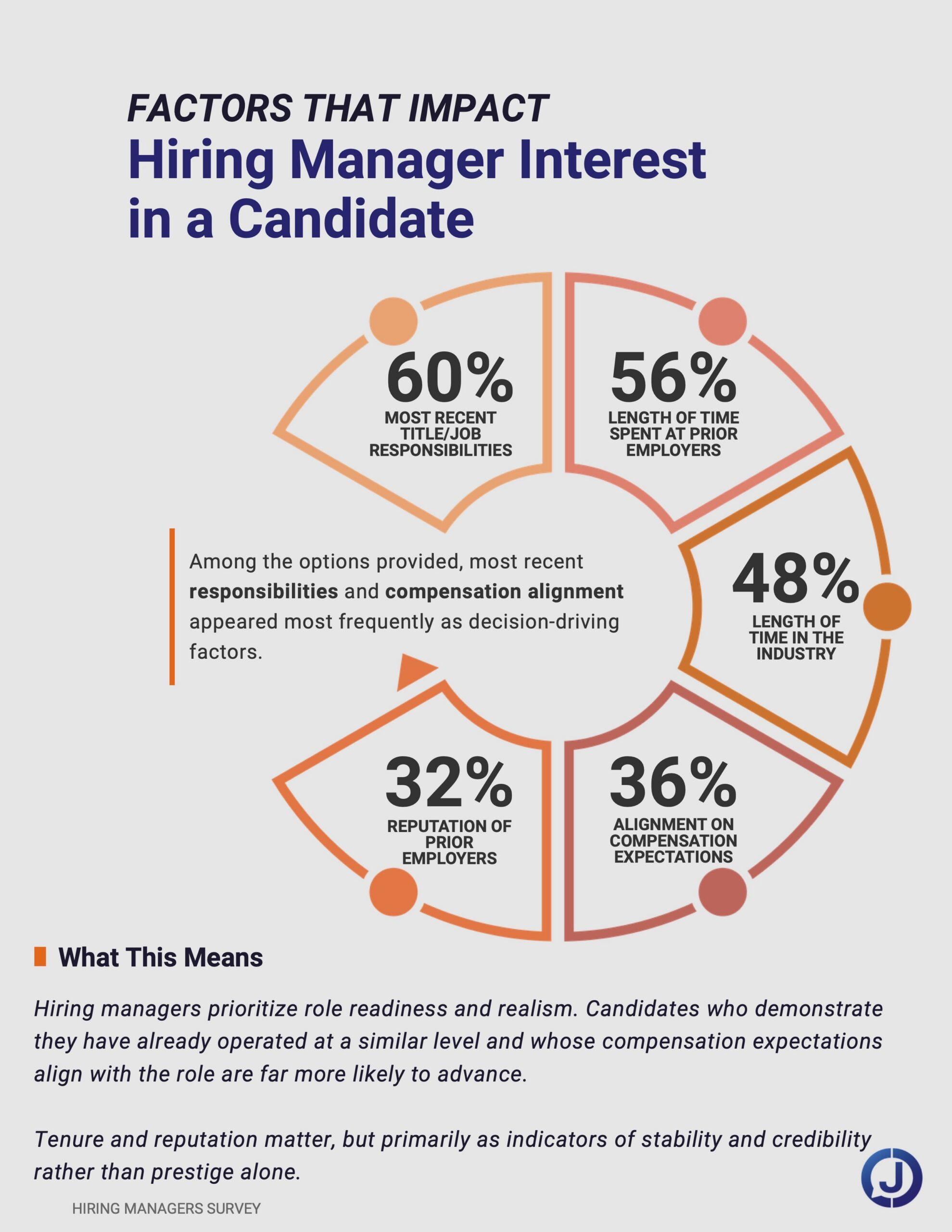
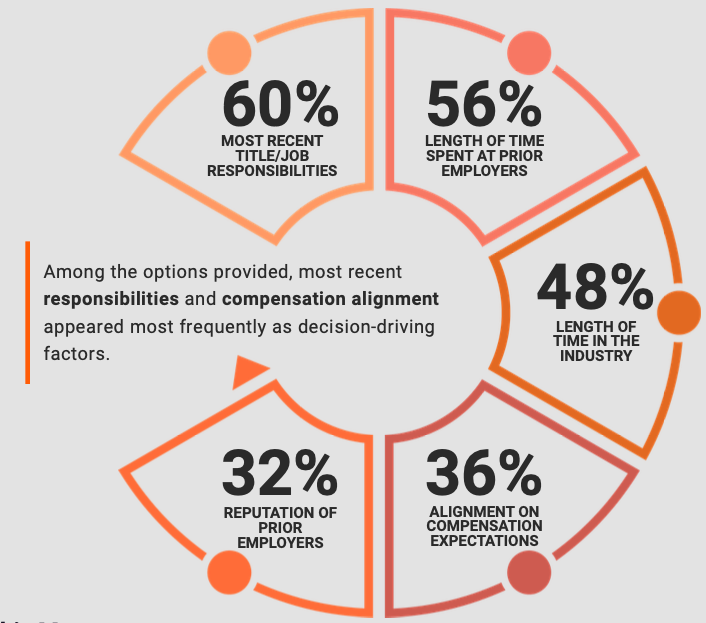
FACTORS THAT IMPACT Hiring Manager Interest in a Candidate
What This Means:
Hiring managers prioritize role readiness and realism. Candidates who demonstrate they have already operated at a similar level and whose compensation expectations align with the role are far more likely to advance.
Tenure and reputation matter, but primarily as indicators of stability and credibility rather than prestige alone.
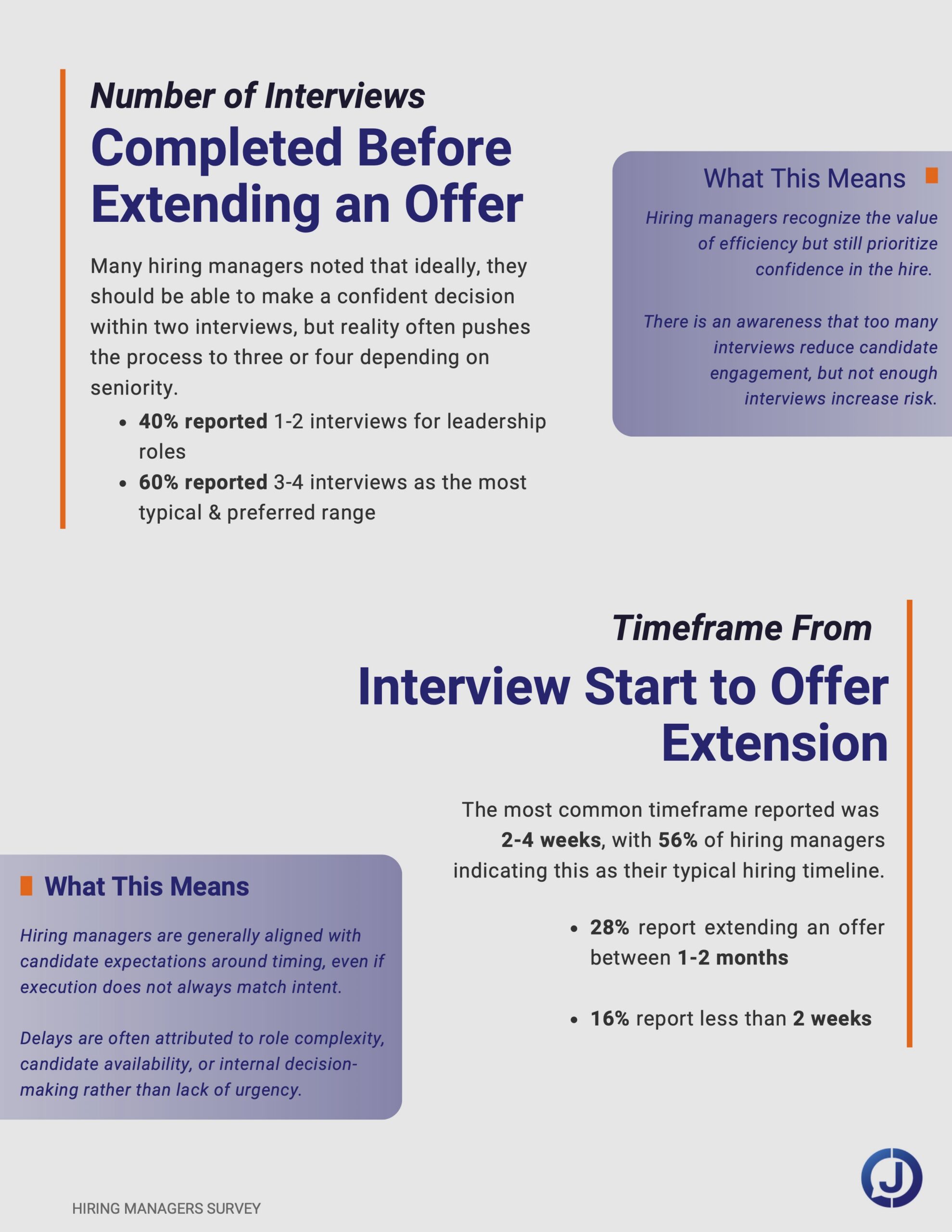
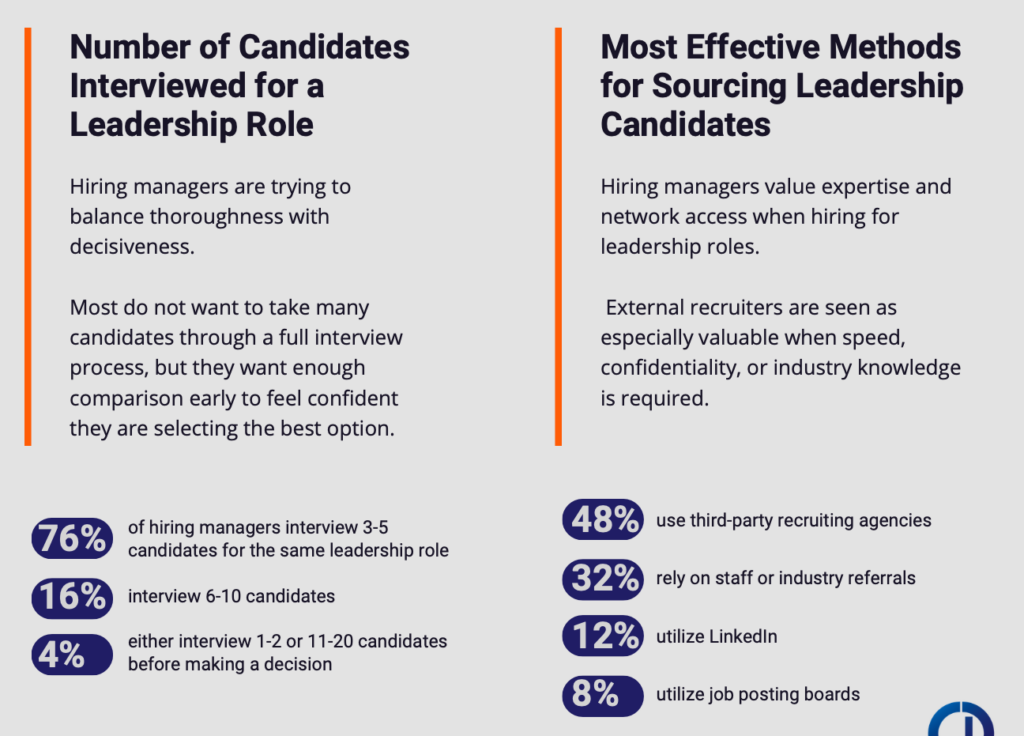
Number of Interviews Completed Before Extending an Offer
- 40% reported 1-2 interviews for leadership roles
- 60% reported 3-4 interviews as the most typical & preferred range
Timeframe From Interview Start to Offer Extension
The most common timeframe reported was 2-4 weeks, with 56% of hiring managers indicating this as their typical hiring timeline.
- 28% report extending an offer between 1-2 months
- 16% report less than 2 weeks
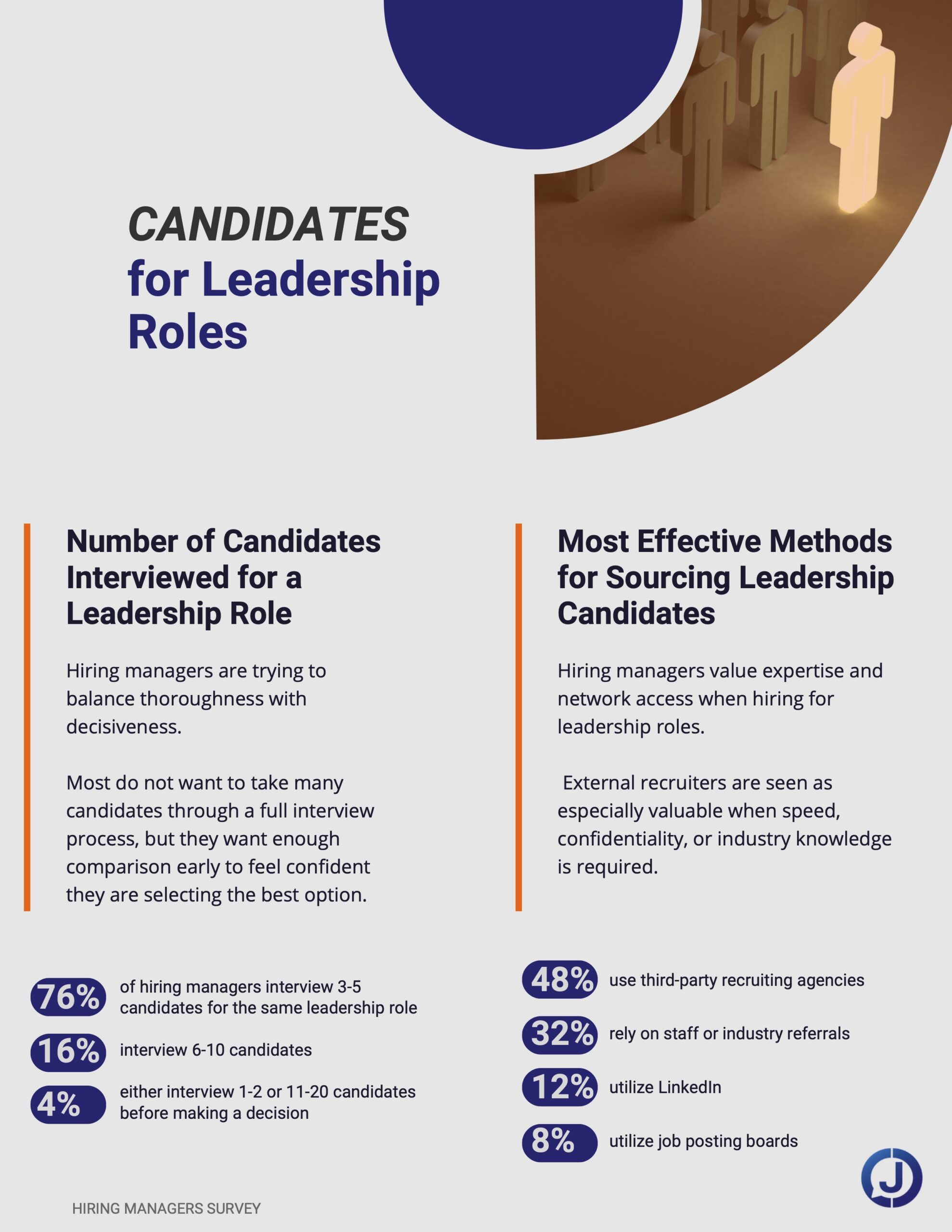
CANDIDATES for Leadership Roles
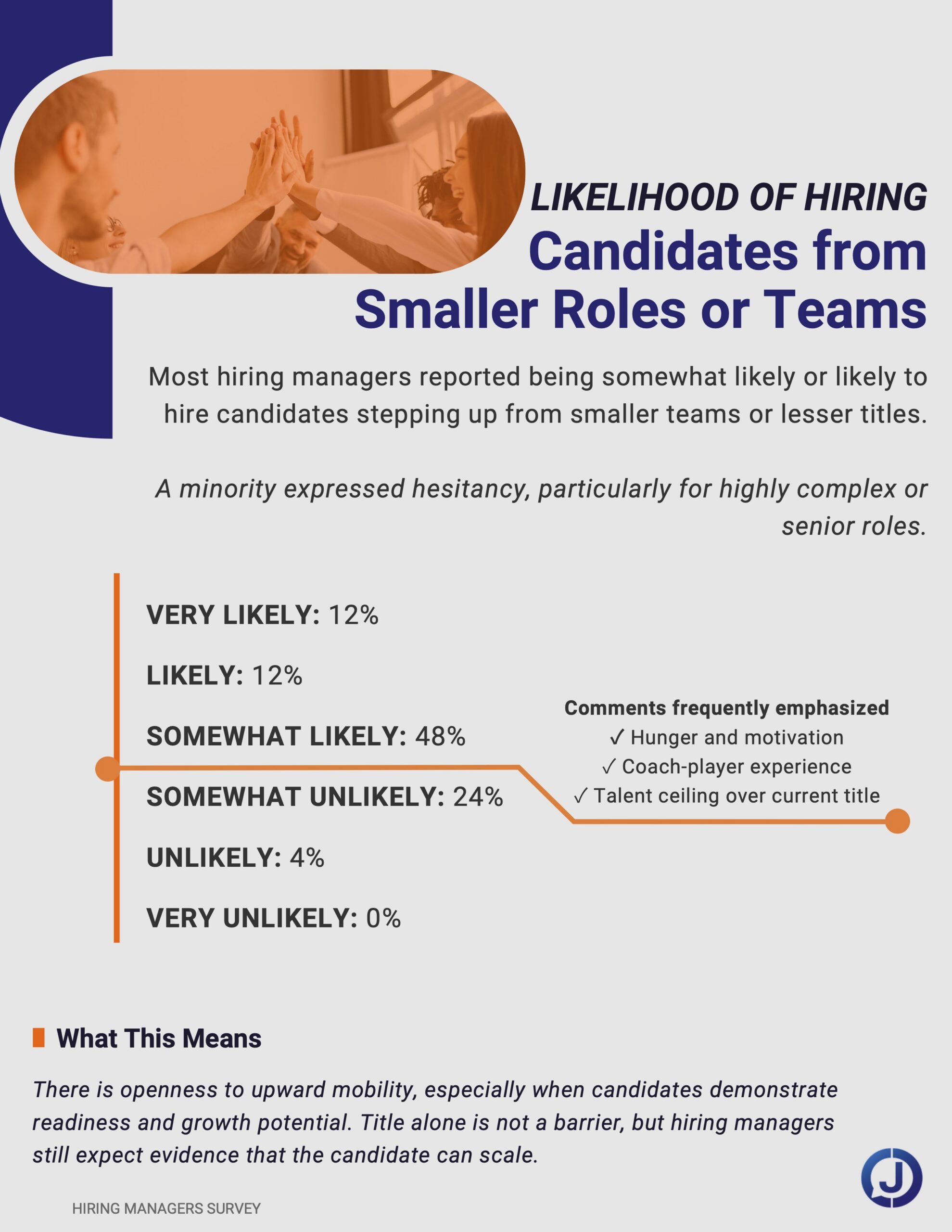
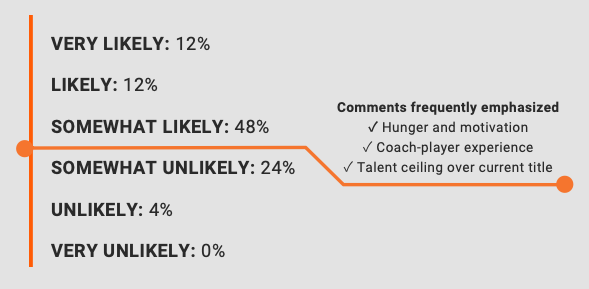
LIKELIHOOD OF HIRING Candidates from Smaller Roles or Teams
Most hiring managers reported being somewhat likely or likely to hire candidates stepping up from smaller teams or lesser titles. A minority expressed hesitancy, particularly for highly complex or senior roles.
What This Means: There is openness to upward mobility, especially when candidates demonstrate readiness and growth potential. Title alone is not a barrier, but hiring managers still expect evidence that the candidate can scale.
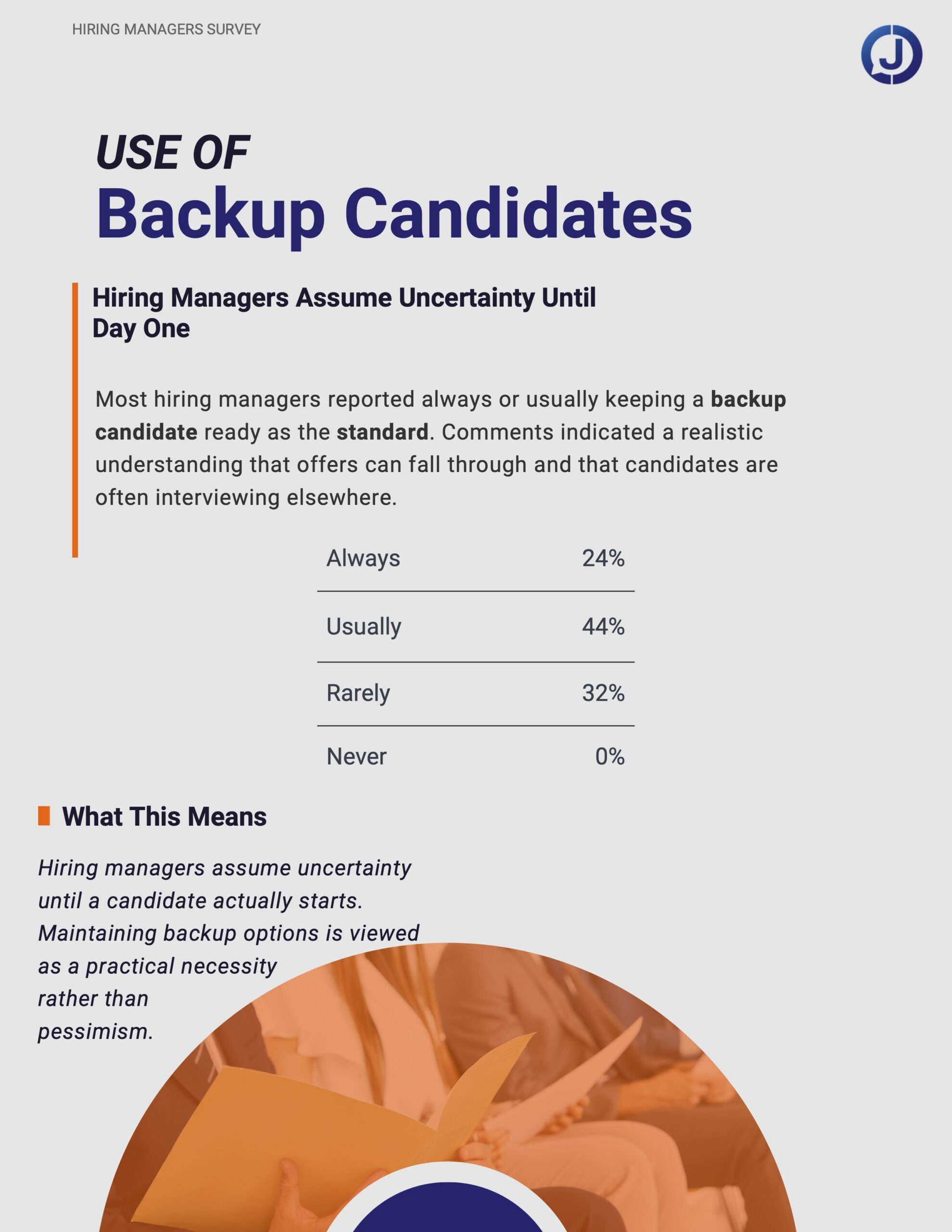
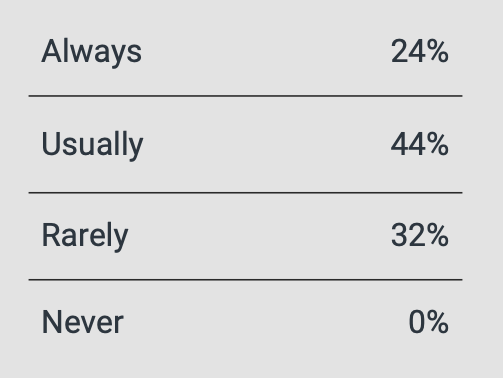
USE OF Backup Candidates
Hiring Managers Assume Uncertainty Until Day One
Most hiring managers reported always or usually keeping a backup candidate ready as the standard. Comments indicated a realistic understanding that offers can fall through and that candidates are often interviewing elsewhere.
What This Means: Hiring managers assume uncertainty until a candidate actually starts. Maintaining backup options is viewed as a practical necessity rather than pessimism
HIRING CANDIDATES Despite Fit Concerns Due to Constraints
However, many added strong caveats on comprising:
- This is not preferred
- It often leads to mixed or negative outcomes
- Leadership roles are particularly risky to compromise on
Several explicitly stated that waiting or developing internal talent can be a better long-term strategy.
What This Means: Hiring managers are operating under real operational pressure. While compromise happens, there is broad recognition that suboptimal leadership hires carry long-term cost.
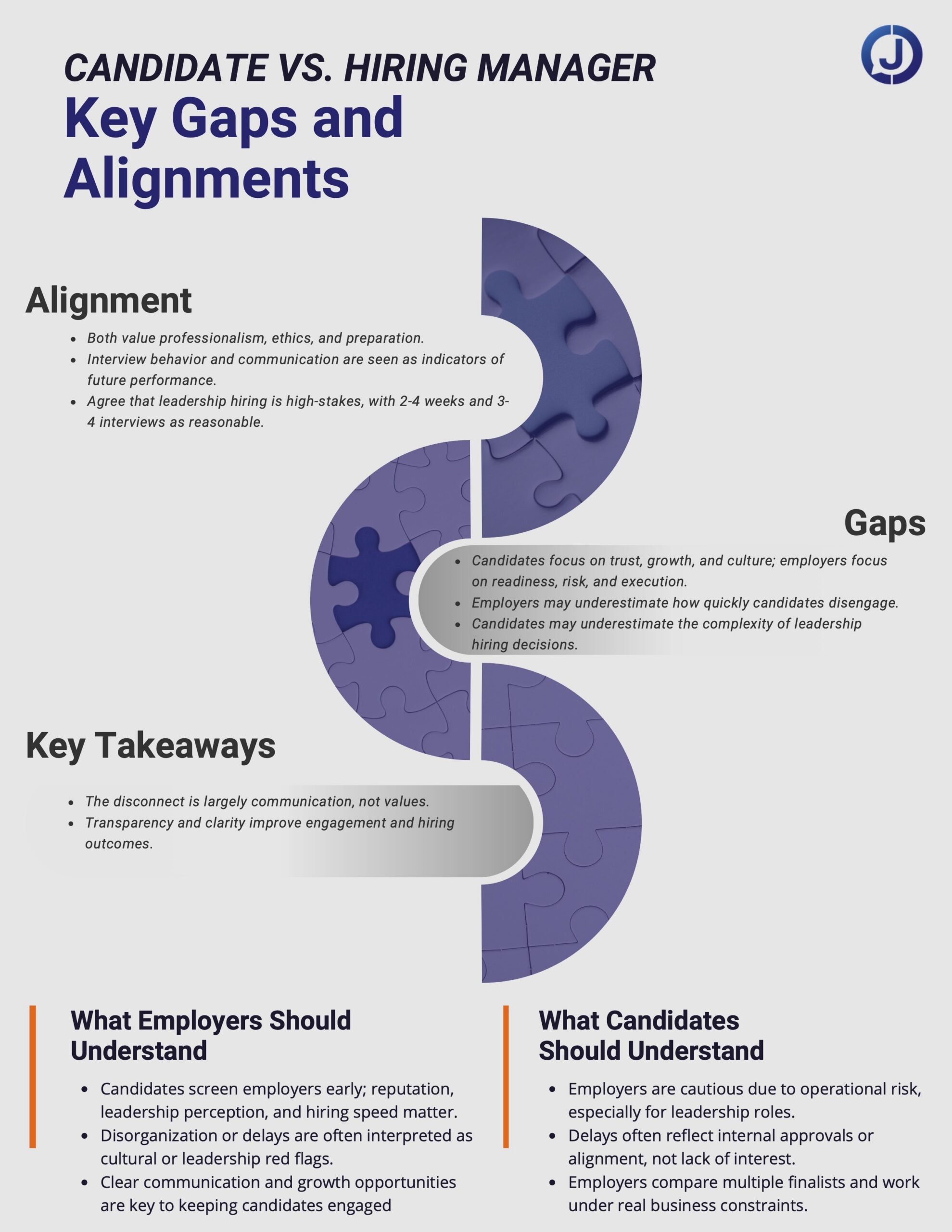
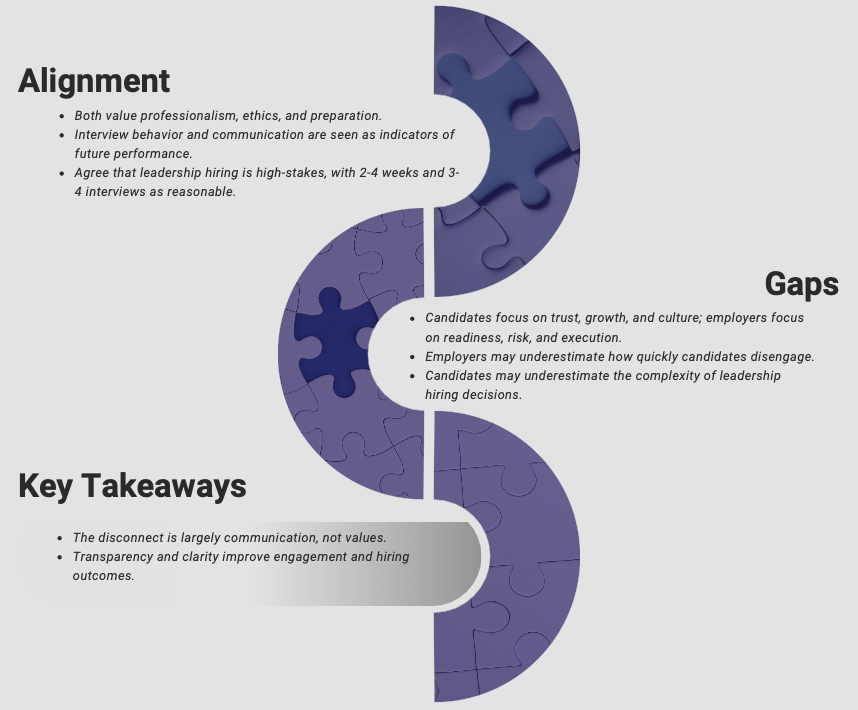
CANDIDATE VS. HIRING MANAGER: Key Gaps and Alignments
What Employers Should Understand
- Candidates screen employers early; reputation, leadership perception, and hiring speed matter.
- Disorganization or delays are often interpreted as cultural or leadership red flags.
- Clear communication and growth opportunities are key to keeping candidates engaged
What Candidates Should Understand
- Employers are cautious due to operational risk, especially for leadership roles.
- Delays often reflect internal approvals or alignment, not lack of interest.
- Employers compare multiple finalists and work under real business constraints.